
QuickBoard is a cognitive-motor rehabilitation and performance training system. It pairs a sensor board with an iPad app that automates the pre-built clinical protocol library, captures bilateral symmetry under full body weight, and produces objective return-to-sport data for physical therapists, athletic trainers, and sports performance staff. QuickBoard is recommended technology for neurocognitive and neuromuscular rehabilitation, named in a peer-reviewed clinical commentary.
Overview
What is QuickBoard?
A cognitive-motor rehabilitation and performance training system. Sensor board plus iPad app, designed for clinicians and performance staff who need objective bilateral data.
What QuickBoard Includes
Three components in one system.
Hardware, software, and a multi-device companion. The Free Agility Drill app is a separate product.
Hardware
HD Sensor Board or HD Pro
Seven-sensor board, no weight limit. HD Sensor Board ($2,295) for youth and at-risk populations. HD Pro ($2,495) for high school through adult. Bluetooth pairs to iPad. Lifetime warranty with active subscription.
iPad App
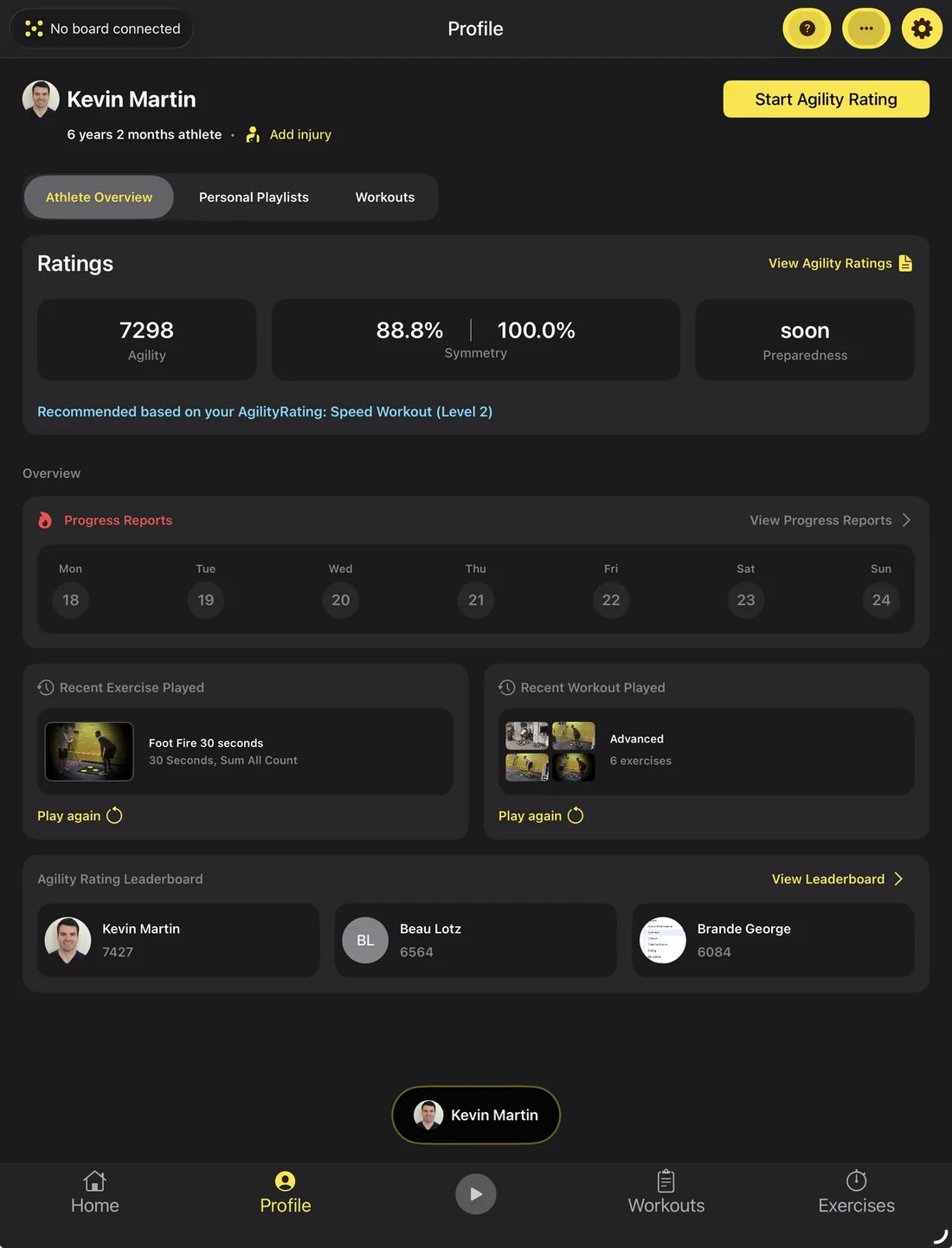
Pre-built clinical protocol library and Agility Rating
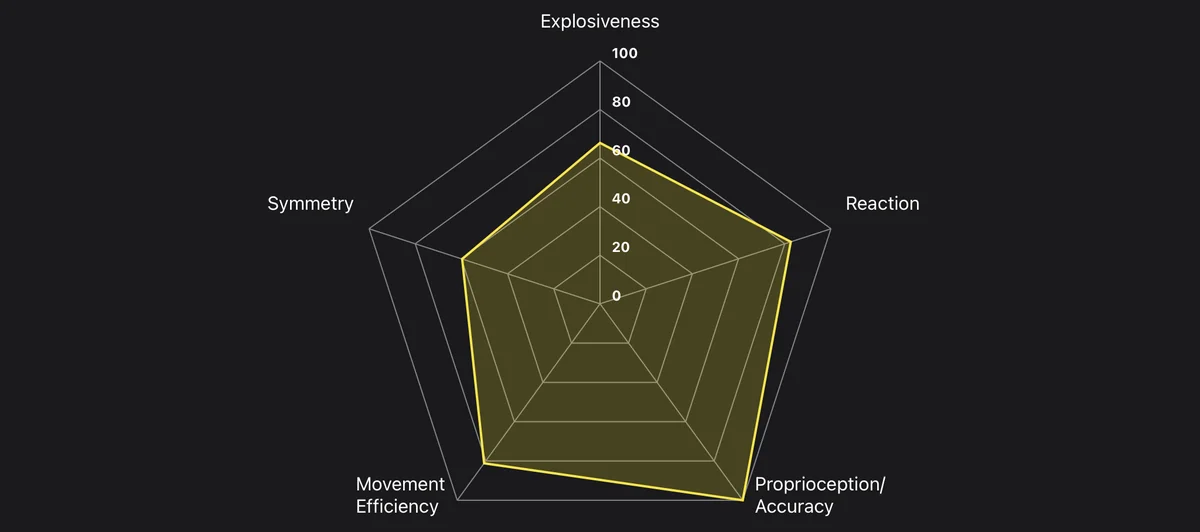
The iPad app automates the pre-built clinical protocol library designed by PTs and runs the Agility Rating composite assessment for return-to-sport decisions.
Companion
QuickBoard Companion
Sync up to three iPads or iPhones to deliver hands-and-feet protocols in a single session. Included at no extra cost.
What QuickBoard Measures
Objective bilateral data.
Every exercise produces millisecond-precision data. Bilateral metrics feed the Symmetry Summary on the Agility Rating Report and Progress Report.
Reaction
Reaction time
Millisecond-precision reaction time, right and left, at full body weight.
Contact
Ground contact time
Right and left ground contact time, supporting bilateral symmetry comparisons.
Accuracy
Touches and Errors
Accuracy is calculated from Touches and Errors counted during each exercise. Bilateral accuracy feeds the Symmetry Summary.
Jump Testing
Jump and reactive strength outputs
Vertical and drop jumps produce air time, jump height, and reactive strength index. With body weight entered, impulse, average force, and peak power are also captured.
Who QuickBoard Is For
Four audiences, one system.
Rehab, performance, neuro, and at-home use cases on the same hardware.
Sports Performance / S&C
Strength coaches and performance staff
Reactive agility, the Agility Rating composite score, jump testing, and cognitive-motor workouts that progress with the athlete.
Ortho Rehab & Athletic Training
Physical therapists and athletic trainers
Cognitive-motor protocols built for ortho populations. Three billable CPT codes (97750, 97530, 97112).
Fall Prevention & Neuro
Stroke, TBI, Parkinson's, balance populations
The Balance Protocol pairs cognitive load with reactive movement, built for at-risk and neuro rehabilitation populations.
Parents & Athletes
Free Agility Drill app for iPad
Standalone iPad app for managing agility drills at home or in the gym. No sensor board required. Free.
Two Products
The full system, and the free app.
Two product lines, same brand, same team. Not the same product.
Full System
QuickBoard sensor board system
Sensor board, iPad app, pre-built clinical protocol library, Agility Rating composite assessment, and QuickBoard Companion. Paid hardware plus monthly subscription. For clinicians and performance staff who need bilateral data and PDF reports.
FreeFree Agility Drill app
Standalone iPad app, no sensor board required. Pre-programmed agility workouts and a custom protocol builder. Cues direction, controls timing, manages work-to-rest. Free.
Category
What QuickBoard is not.
QuickBoard is in a different clinical category from force plates and portable reaction lights. Force plates measure ground reaction forces and physical readiness without cognitive demand. Portable reaction lights run simple visual reaction drills with the target on the ground where the patient looks down. QuickBoard pairs cognitive demand with motor execution under full body weight, captures bilateral symmetry data, runs pre-built clinical protocols automatically, and produces PDF reports for the clinician.
QuickBoard exercises may also support balance. Paquette et al. (2016) found active young adults improved reach balance and eyes-open single-leg stability over six weeks of QuickBoard training. Eyes-closed stability did not improve, and there was no no-training control group.
Research Foundation
Peer-reviewed citations behind QuickBoard.
Independent research from TRIA Orthopedic Center (Chmielewski et al., IJSPT 2024) used QuickBoard as the reaction test for ACL patients, who gained less on reaction tests than on hop tests. Galpin (2008) and Martin (2012) document reactive performance and cognitive-motor outcomes. Paquette (2016) shows balance and stability improvements in recreationally active young adults following QuickBoard training.
FAQ
Common questions about QuickBoard.
Automates cognitive-motor protocols on a sensor board paired with an iPad app. Captures reaction time, ground contact time, bilateral symmetry, and accuracy from Touches and Errors. Auto-generates Progress Reports and the Agility Rating Report as PDFs that export to the clinician's email.
Physical therapists, athletic trainers, sports performance and strength-and-conditioning staff, fall prevention and neuro specialists, and parents and athletes (via the free Agility Drill app). In use at private clinics, hospital systems, university athletic programs, and professional sports teams.
HD Sensor Board $2,295. HD Pro $2,495. Lifetime warranty with active subscription. Software subscriptions $49.99 to $199.99 per month based on profile count. Payment plans up to six months for qualifying clinics. See full pricing.
Yes. The free Agility Drill app runs agility drills on iPad without the sensor board. The free app does not include the Agility Rating, the pre-built clinical protocol library, or the auto-generated PDF reports, which require the sensor board. Get the free app.
QuickBoard exercises may support balance. Paquette et al. (2016) found active young adults improved reach balance and eyes-open single-leg stability over six weeks of QuickBoard training. Eyes-closed stability did not improve, and there was no no-training control group.
Different clinical category. Force plates measure ground reaction forces and physical readiness. Portable reaction lights run simple reaction drills with the target on the ground. QuickBoard pairs cognitive demand with motor execution under full body weight, captures bilateral symmetry, and runs clinical protocols automatically with PDF reporting.
See it in action
See it before you buy.
A QuickBoard rep walks your team through one or two pre-built protocols, runs an Agility Rating session, and shows the auto-generated reports.
Or read the published research →